Die 44 berühmtesten Planeten des Sonnensystems
Ranking nach den Aufrufen der englischen Wikipedia, gemittelt über 6 Monate — je näher an Platz 1, desto berühmter.
Earth steht oben — Heimvorteil —, vor Moon, Jupiter, Saturn und Mars. Das sind die 44 berühmtesten Welten des Sonnensystems: klassische Planeten, Zwergplaneten, Monde und Asteroiden, geordnet nach den Aufrufen der englischen Wikipedia. Scroll durchs System und schau, wie viele du ohne Hilfe nennen könntest.
- EarthEarth is the third planet from the Sun and the only astronomical object known to harbor life.
- MoonThe Moon is the only natural satellite of Earth. It orbits around Earth at an average distance of 384,399 kilometers (238,854…
- JupiterJupiter is the fifth planet from the Sun, and the largest in the Solar System.
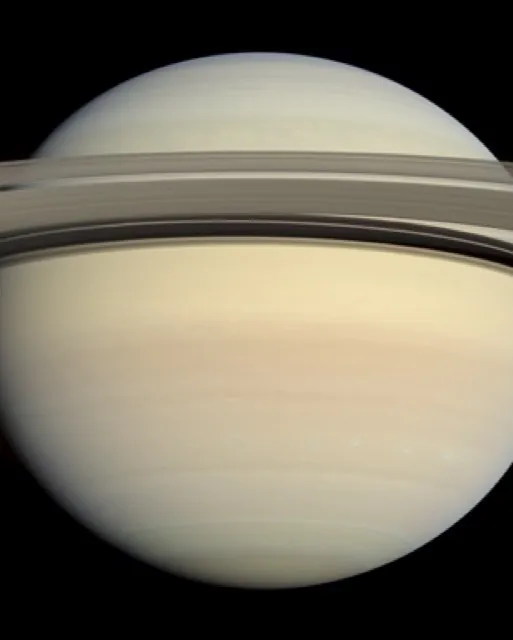
- SaturnSaturn is the sixth planet from the Sun and the second largest in the Solar System, after Jupiter.
- MarsMars is the fourth planet from the Sun. It is also known as the "Red Planet", for its orange-red appearance.
- VenusVenus is the second planet from the Sun. Similar in size and mass to Earth, Venus has no liquid water, and its atmosphere is far…
- PlutoPluto is a dwarf planet in the Kuiper belt, a ring of bodies beyond the orbit of Neptune.
- NeptuneNeptune is the eighth and farthest known planet orbiting the Sun.
- Mercury
- UranusUranus is the seventh planet from the Sun. It is a gaseous cyan-coloured ice giant.
- TitanTitan is the largest moon of Saturn and the second largest in the Solar System.
- Ceres
- Europa
- GanymedeGanymede is a natural satellite of Jupiter and is the largest and most massive moon in the Solar System.
- Io
- Eris
- TritonTriton is the largest natural satellite of the planet Neptune.
- Phobos
- EnceladusEnceladus is the sixth-largest moon of Saturn and the 18th largest in the Solar System.
- HaumeaHaumea (minor-planet number 136108) is a dwarf planet located beyond Neptune's orbit.
- CharonCharon, formal designation (134340) Pluto I, is the largest of the five known natural satellites of the dwarf planet Pluto.
- Callisto
- MakemakeMakemake is a dwarf planet orbiting the Sun in the Kuiper belt, a disc of icy bodies beyond the orbit of Neptune.
- Vesta
- DeimosDeimos is the smaller and outer of the two natural satellites of Mars, the other being Phobos.
- Eros433 Eros is a stony asteroid of the Amor group, and the first discovered, and second-largest near-Earth object.
- IapetusIapetus is the outermost of Saturn's large moons. With an estimated diameter of 1,469 km (913 mi), it is the third-largest moon…
- Bennu101955 Bennu (provisional designation 1999 RQ36) is a carbonaceous asteroid in the Apollo group, in the Nysa-Polana complex…
- Rhea
- MirandaMiranda is the smallest and innermost of Uranus's five round satellites.
- Titania
- Pallas
- MimasMimas is the seventh-largest natural satellite of Saturn. With a mean diameter of 396.4 kilometres or 246.3 miles, Mimas is the…
- Tethys
- Dione
- OberonOberon is the outermost and second-largest major moon of the planet Uranus.
- Ariel
- Ryugu162173 Ryugu (provisional designation 1999 JU3) is a near-Earth object and also a potentially hazardous asteroid of the Apollo group.
- Hygiea10 Hygiea is a large asteroid in the outer region of the main asteroid belt, between the orbits of Mars and Jupiter.
- ProteusProteus, also known as Neptune VIII, is the second-largest moon of Neptune and the planet's largest inner satellite.
- NereidNereid, or Neptune II, is the third-largest moon of Neptune. It has the second-most eccentric orbit of all known moons in the…
- UmbrielUmbriel is the third-largest moon of Uranus. It was discovered on October 24, 1851, by William Lassell at the same time as…
- Juno
- Itokawa25143 Itokawa (provisional designation 1998 SF36) is a sub-kilometer near-Earth object of the Apollo group and also a…
Denkst du, du kannst alle 44 nennen?
Mehr Challenges zum knacken
Zehn Minuten. Hundert Namen. Dein Zug.